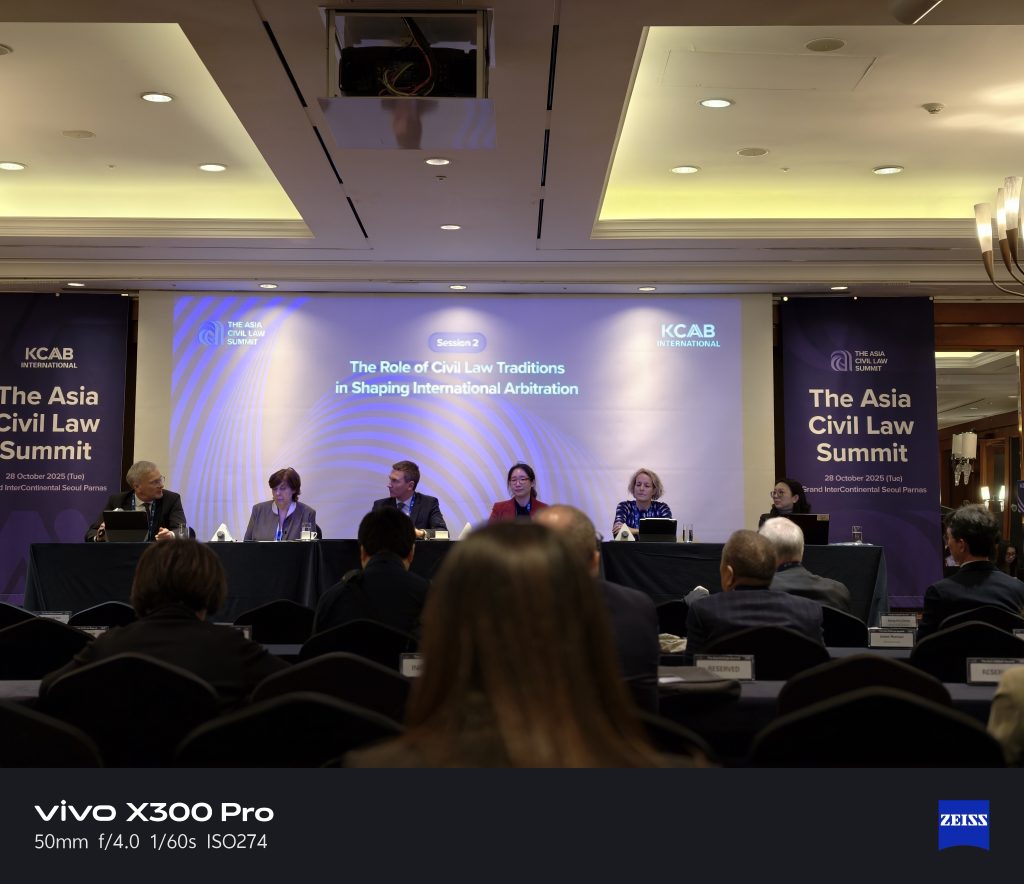
Navigating the Divide: Core Civil Law Principles and the Future of International Arbitration
The recent discussions among leading practitioners underscore that navigating the differences between civil and common law traditions remains a central challenge in international arbitration. While arbitrators must apply the chosen law correctly, civil law practitioners appearing before predominantly common law tribunals must adapt their presentation, often needing to “translate” civil law concepts—such as pleading German Wegfall der Geschäftsgrundlage as frustration of a contract.
Panellists cautioned that the worst approach is to import civil law traditions, particularly regarding statutory interpretation, the reliance on reasoning by analogy, and contract interpretation, which differ fundamentally from common law approaches focused on case law. Similarly, common lawyers overseeing cases governed by codes may incorrectly prioritize finding binding case law when, in the civil tradition, the focus lies more on expanding concepts through doctrine or travaux préparatoires (preparatory work).
Despite these structural differences, common ground exists on overarching principles. The concept of good faith (reasonableness and fairness) is highly permeating, containing both substantive and procedural components across virtually all civil law jurisdictions. However, even closely related civil law systems differ significantly in application: French law (Article 1195 of the Civil Code, Amended by Ordinance No. 2016-131 of February 10, 2016 – art. 2) grants a party the right to request renegotiation due to changed circumstances (imprévision), whereas Dutch law (Article 6:258 of the Dutch Civil Code) only grants the right to ask a judge to adapt the contract.
Procedural practices also reveal disparities, particularly concerning the standard of proof. Common lawyers often view civil law as “underdeveloped” in evidence, as many civil systems rely on “inner conviction” for the merits. This contrasts with the common law standard of a balance of probabilities. However, the burden of proof (Beweislast) plays a larger role in civil law, and in assessing quantum (damages), civil law sometimes applies a lower standard, granting arbitrators more liberty to assess losses based on established facts. This distinction can impact how tribunals handle document production requests.
Historically, civil law traditions have shaped core tenets of international arbitration. The French approach, developed through case law, exported vital principles such as the severability of the arbitration agreement from the main contract (codified in 1981) and competence-competence, allowing the tribunal to determine its own jurisdiction.
However, the French approach to judicial review is contentious. French courts currently employ a broad denovo review on matters of jurisdiction and public policy, not deferring to the arbitrator’s findings or the evidence submitted during the arbitration. This scope is seen as more extensive than the more limited review taken by German and Dutch courts, risking attracting corresponding objections and potentially delaying proceedings.
Ultimately, the UNCITRAL Model Law serves as the critical unifying framework.

Developed based on laws from diverse jurisdictions (including France, Germany, the US, and the UK), the Model Law reflects worldwide consensus on principles like party autonomy, limited court intervention, and competence-competence. By emphasizing the need for uniformity in its application and the observance of good faith, UNCITRAL provides a global standard that accommodates different legal traditions and offers tools, like the CLOUT database, to ensure consistent interpretation across borders. Furthermore, UNCITRAL is currently debating how to update its instruments to reflect digital advances, including electronic awards and smart contracts.
———-
Asia Legal – Business Law Firm
W: asialegal.vn
E: info@asialegal.vn
T: (+84) 24 2269 3399
Hotline/Whatsapp/Wechat/Viber/Zalo: (+84) 84 400 8484
A: 15th Floor, HT Building, No 80, Duy Tan Road, Hanoi, Vietnam